Showing posts with label History. Show all posts

Sunday, March 29, 2015

1775

1775 is an excellent low complexity wargame that is still full of strategy and history. The object of the game is to have control of more colonies than your opponent. There are a few scenarios for playing a shorter or different historical battle (Battle for Quebec).
The board is well illustrated. Green cubes are First Nations (neutral until friendly units are moved on top of them), American Colonists (Blue regulars and white militia), and British Forces (Red regulars and Yellow Loyalists). Setup is indicated by the cube illustrations in each region. Here is the board after the American setup.
After the British setup.
In combat, you roll one die for each cube of the color you have, to a maximum of three for irregular and two for regular troops. Defender rolls thier dice and applies the result first. Targets are hits, running men are flee results and blank die are command decision (may move the corresponding colored cube to an adjecent friendly region. Dice are rolled until one side has lost off of its cubes.
Turn order is done by randomly drawing a cube from the black bag. You must play one move card and as many event cards as you wish. The game can end sooner if the forces on one or both sides have played all of thier "Treaty of Paris" cards. Move cards indicate the number of armies that can move (some or all the cubes in a region) and how many spaces they can move. There is also ship and boat movement in the game.
Renforcments are placed during the beginning of your turn. Four cubes plus all of your fled units can be placed on any region your side controls that has a city, like Halifax above.
Here is the game after a few turns. There are French and Hessian allies that can join the fight through playing of cards.

I love the simple elegance of this game.

Friday, March 27, 2015

A Few Acres of Snow

A Few Acres of Snow is a historical boardgame from Treefrog Games.It is based on the French and Indian war of 1754-1763. It has a mechanic similar to the game Dominion where cards are selected/purchased and placed in the discard pile to be later shuffled to form the draw pile when it is exhausted.
Above is the game board set up. There are two ways of winning: collecting enough villages cubes and/or town disks through successful sieges and raids, or the British laying successful siege on Quebec or France laying a successful siege on Boston or New York.

The gameplay goes slow, with up to two actions per turn plus a free action, but each activity matters in the overall game. It lends itself to the feeling that large events are transpiring, planned from far away.

The cards themselves have a lot going on but are simple once you know what to look for. At the top you have the location. You get new location cards when you colonize to them or take them over. They are also important for setting up fortresses and expanding from a village to a town.

The next area has a list of places the colony is connected to and how to get there. At the bottom is a list of what else the card can be used for: ship, military, settlers or money. For instance, to settle Halifax, you could play this card (because it is connected to that place) and would then have to play a card with a ship (to get the colonists there). If the place to colonize has a settler icon then another card with a settler must be played.

During a siege, this card can be played for another point in the favour of the British.

For funds, this card can be played for three coins.

I have played this game a few times and it is enjoyable and exciting.

Friday, July 18, 2014

Maritimes - Fortress Louisbourg - Inside the Fortress

The inside of Fortress Louisbourg is very nicely made. Although there were other barracks nearby, they are still ruins so the main building is doing triple duty: Barracks for men and officers, Chapel and Governor's quarters.
Here is the typical uniform of a French garrison soldier in the 1740's.
This is the back of the main building.
This paddock is for the Governor himself. It would have animals, stored food and wine as well as a small garden.
Here is the main inner area of the fortress, with ramps to the upper defencive wall.
At points in the town are guard posts for the soldiers keeping an eye on the populace and for possible invaders

Wednesday, July 16, 2014

Maritimes - Fortress Louisbourg - Outside the Fortress

Here is a view of the fortified causeway entrance. This is also the main entrance to the fort turing the main part of tourist season.Note the low lying areas that could be filled with water to act as a moat, if the defenders have enough time.
Here is the series of defendable lines that soldiers could be positioned at to repluse attackers. Because of the stepped nature of these defenses, they are useless to the attacker if they take them.
This is a view of the rise on the other side of the depression tot eh middle of the fortress. Cannon can and were placed to bombard and beseige the fortress.
The walls are high and several feet thick.
Cannon were situated to either give supporting fire or aimed together to give barraging fire.
One of the last defenses are these sniper nests. You could aim at distant or nearby attackers or scouts with secure comfort.

Monday, July 14, 2014

Maritimes - Fortress Louisbourg - Introduction

Fortress Louisbourg was built by the French government in order to have an ice free harbour to protect thier fishing industry. Originally called Havre à l'Anglois, it was established in 1713. This habitation quickly grew with more buildings, fortified walls and a garrison. This Fortress was to be the most expensive one, for the time, in North America by its heyday in the mid 1740's.

Unfortunatly it was built surrounded by higher ground and the main defensive consideration was defending against sea based assaults. This was a factor in its surrender to the British in 1745. When it was given back in the Treaty of Aix-la-Chapelle, the British built a fortified port in Chebucto Bay and called Halifax in 1749 (for more about Fort George in Halifax, click on my blog article here)

In order to stop the British Colonists moving Westward, the French and its Indian allies tried to stop them which led to the French Indian War in 1754 which led to the larger Seven Years War in 1756.

In 1757, Fortress Louisbourg suffered a failed attack by the Britsh but the French Navy helped to repluse it. Without the Navy's help, it fell under a new British assault in 1758.

This fortress was used in an assault on Quebec the next year that was the last gasp of French control of North America.

Engineers systematically demolished the walls and fortifications in 1760 to make reuse by the French impossible. In 1961 a rebuilding of the Fortress and town was done for use in a historic park, which was expanded and still in use today.

Tuesday, July 8, 2014

Maritimes - Fort Edward

Fort Edward is located in Windsor, Nova Scotia. It was an important British fort and was built to withstand Mi'kaq, Acadian and French attacks. In 1750, the British failed to take the Acadian settlements of Chignecto (the ithsmus between New Brunswick and Nova Scotia) and ordered the local Acadians to burn down thier Catholic church so a fort could be built on the strategically positioned land.
After the Battle of Fort Beausejour in 1755 (go here for my post), Fort Edward was the central point where local Acadians were rounded up during the Bay of Fundy campaign. More than 7000 Acadians were sent away during this event. During the expulsion there were Acadian and Mi'kmaq raids on the fort, which did damage a warehouse. These raids were for nought.
During the American Revolution and the War of 1812, the fort was garrisoned and used to house privateer prisoners of war.
During WW1, the fort was used as a training base. In particular it was the site used to train the Jewish Legion. They were to be used to free the Palastinian area from the Ottoman Empire and they participated in the Jordanian Valley actions in 1918.
In 1920 the fort became a national historic site. In 1992 the blockhouse was designated a federal heritage building and is the oldest surviving blockhouse in North America. Here is a look at the inner architecture of the blockhouse.

Friday, July 4, 2014

Sun Tzu For Gamers - Part 2 - Waging War

This next chapter from Sun Tzu's "Art of War" is on Waging War. Here we will talk about the cost of war. (chapter one here)

In the operations of war, where there are in the field a thousand swift chariots, as many heavy chariots, and a hundred thousand mail-clad soldiers, with provisions enough to carry them a thousand LI, the expenditure at home and at the front, including entertainment of guests, small items such as glue and paint, and sums spent on chariots and armor, will reach the total of a thousand ounces of silver per day. Such is the cost of raising an army of 100,000 men.

From a model builders standpoint, building your forces is a greater price than the sum of the models. Paints, glues, files, brushes and time all conspire to elevate the cost. Buying lots of models and trying to paint them all is a large psychological barrier. Starting small and adding to your forces is almost always better.

From a gameplay standpoint, balance the use of expensive models (point wise) with hordes of low point models. Balanced approaches to army building means a greater ability to respond and less chance the enemy can devise a strategy against it.

When you engage in actual fighting, if victory is long in coming, then men's weapons will grow dull and their ardor will be damped. If you lay siege to a town, you will exhaust your strength. Again, if the campaign is protracted, the resources of the State will not be equal to the strain.

From a model builder's standpoint, models get damaged as time goes on. They must be repaired. Plus the longer you play a game, the greater chance of newer and better looking models being produced is greater. Expect this temptation.

From a gameplay standpoint, only games with endurance has this worry. If it does , you can either play fast for a quick end or slow to wear the opponent out. Use the strategy that complements your strength: excellent assault with quick play, excellent defence with slow play.

Now, when your weapons are dulled, your ardor damped, your strength exhausted and your treasure spent, other chieftains will spring up to take advantage of your extremity. Then no man, however wise, will be able to avert the consequences that must ensue. Thus, though we have heard of stupid haste in war, cleverness has never been seen associated with long delays.

From a model builder's standpoint, the newer players have the newest models. They will win against old veterns until the vetern understands the strengths and weaknesses of the new models. Then they will consistantly win because they have understood thier own models for longer. The faster a vetern understands these new models the faster they can start winning.

From a gameplay standpoint, allies cease being so if they smell weakness. You can either use this fact to draw them into a trap for thier own resources to be vunerable or consolidate before this point occurs.

There is no instance of a country having benefited from prolonged warfare. It is only one who is thoroughly acquainted with the evils of war that can thoroughly understand the profitable way of carrying it on.

It is only through mistakes that an errors will not happen again. Don't be afraid of them. If you create a badly painted unit, you will know to use a different way. If you make a bad play, remember it.

The skillful soldier does not raise a second levy, neither are his supply-wagons loaded more than twice.

Don't hesitate. If you have a gut feeling and need to react, react. Delay gives your opponent more time to counter the action. If it is a wrong choice then you will know for next time and will naturally react accordingly.

Bring war material with you from home, but forage on the enemy. Thus the army will have food enough for its needs.

For modellers, having that fancy paint might work great for you but if you are somewhere other than home the local brand might not cut it. Plan accordingly.

For gameplay, use the enemies resources against them while denying thier own. Even though fighting in the enemies country is hazardous, this foraging will benifit you if it becomes a protracted battle or if you must retreat.

Poverty of the State exchequer causes an army to be maintained by contributions from a distance. Contributing to maintain an army at a distance causes the people to be impoverished. On the other hand, the proximity of an army causes prices to go up; and high prices cause the people's substance to be drained away. When their substance is drained away, the peasantry will be afflicted by heavy exactions. With this loss of substance and exhaustion of strength, the homes of the people will be stripped bare, and three-tenths of their income will be dissipated; while government expenses for broken chariots, worn-out horses, breast-plates and helmets, bows and arrows, spears and shields, protective mantles, draught-oxen and heavy wagons, will amount to four-tenths of its total revenue. Hence a wise general makes a point of foraging on the enemy. One cartload of the enemy's provisions is equivalent to twenty of one's own, and likewise a single PICUL of his provender is equivalent to twenty from one's own store.

A lean army does not need to be supported from afar. This means more energy can be used to make attacks rather than worry about arms and equipment. It also leads to a happier homeland and unhappier enemy populace. This also means a happier homelife if your family/spouse/cat is not starving or going without because of your hobby and you are using better alternatives of playing your hobby. Selling off old unplayed armies/games is a good way of doing this.

Now in order to kill the enemy, our men must be roused to anger; that there may be advantage from defeating the enemy, they must have their rewards. Therefore in chariot fighting, when ten or more chariots have been taken, those should be rewarded who took the first. Our own flags should be substituted for those of the enemy, and the chariots mingled and used in conjunction with ours. The captured soldiers should be kindly treated and kept. This is called, using the conquered foe to augment one's own strength.

For modellers, reward yourself for goals set. If you finished painting a unit ahead of schedule, take some time doing something else or working on that terrain piece. For gameplay, there are few mechanics for rewarding your forces for good gameplay, but you can model it. I had a squad of Necron Scarabs go against Space Wolf Terminators and only wanted to delay thier advance. After three long turns I won. That battle can be modelled on the bases with Space Wolf Terminator helmets to mark the occassion and generate fun conversation amongst fellow gamers.

In war, then, let your great object be victory, not lengthy campaigns. Thus it may be known that the leader of armies is the arbiter of the people's fate, the man on whom it depends whether the nation shall be in peace or in peril.

When modelling, set short term objectives for painting and you will always be satisfied. When gaming, go for the scenario and not for total victory. Then you will be a happy general.

Next is "Attack by Strategem".

Tuesday, June 24, 2014

Maritimes - Fort Beausejour/Fort Cumberland

Near Aulac New Brunswick, just before you get to Nova Scotia, is Fort Beausejour or Fort Cumberland (depending on who you ask).
There were many skirmishes that took place near here.The fort started to be constructed in 1751 because after minor conflict in the area the previous year, an English fort was built nearby (Fort Lawrence). This key land route from Fort Louisbourg to Quebec was important enough for the French to build several forts, Fort Beausejour being one of them. A wiki article on the fort is here.
It was unfinished when it was attacked and taken over by the British in 1755. It was then that it was renamed Fort Cumberland. This was the beginning of the end of French influence in North America.
When the English won, most of the Acadians (French Colonists) in the area were told to swear loyalty to the British Crown. They refused as they feared retaliation from both sides. The British them burned the homes of the French Acadians and ejected them from the area. This process carried on throughout the Atlantic provinces as it meant English colonists could take thier land and the British could be safer from the possibility of reprisals. This was the start of the expulsion of Acadians in the Atlantic provinces to other parts of the world: Louisianna, New England, South America, Carribian and France. Some hid from the British to avoid expulsion and eked out a life in remote areas. Many came back and set up communities where they originally were or new ones. It is these people that make up the lovely Acadian French areas of the Atlantic Provinces.
Fort Cumberland was attacked during the American Revolutionary war by American revolutionaries who recruited Acadians and British citizens. If the fort had fallen, many historians believe Nova Scotia would have joined the American side due to British weakness in the area. Instead it solidified the crowns rule.
Today the site is open all year round and there are renactors and a museum available during peak tourist season.

Friday, June 20, 2014

Sun Tzu for Gamers - Part 1 - Laying Plans

I've read Sun Tzu's Art of War several times over my life. It is straightforward and simple. Like all wisdom, it is easy to forget in the heat of battle...even tabletop battle. This is why I will go over each of the thirteen parts of Sun Tzu's book with a Post for each part.

My reference is a marvellous website located here, made by John Watson. I will speak of the gaming angle of the points Sun Tzu makes.

Firstly, Sun Tzu was a General and master strategist for China around 500 BCE. Some credit the “Art of War” treatise with his descendant, Sun Bin, who lived in the early 300’s BCE. Regardless the Art of War has been an insightful and influential work in overcoming problems of all sorts, in particular warfare. Anyways, on with the article.

Five Constant Factors

The art of war is governed by five constant factors: Moral Law, Heaven, Earth, Commander, and Method and Discipline.

Moral Law signifies the accord with the rules of the game. The rules are constant until a new edition or revision. If you do not know the rules, would gamers will help teach them to you. If you continually don’t know the rules and misquote them, you will not be successful in finding people to play against.

Heaven signifies the environment you play in, or your gaming zone. How many players of the game you play are in your area? What is the gaming area available? Is it a chaotic schedule of events or a regular night. The larger your player base and better your gaming schedule and playing area is, the more games you can play and want to play.

Earth signifies the terrain you play with. Terrain does not have to be pretty but it has to make sense and be functional. A new player should look at a hill and tell what side is difficult terrain and what side is sloping normal terrain.

Commander signifies the virtues of wisdom, sincerity, benevolence, courage and strictness. Wisdom benefits strategy. Sincerity promotes trust. Benevolence eliminates arguments. Courage encourages boldness. Strictness adds experience. All these things lead to a commander you want to play against. To increase your virtues in a game are things to aspire to in order to make you the commander.

Method and Discipline signifies the army you play with, how they are supplied and how they are brought to the battlefield. If you have an army that is not proxied, in good repair, varied, in secure containers and have reliable means to get to your gaming events then you are most of the way there. If your army is nicely painted, custom built, custom carrying device, arrive to gaming events early and often, and have the newest additions, then your method and discipline are strong.

These constant factors individually make for a good gamer. Together they make for a great one. When many gamers have the constant factors then you have a fantastic gaming community.

Part 1 Basics

All warfare is based on deception. Further to this: if you can attack, make it seem like you cannot. When you are close, make it seem like you are far away. When far away, make it seem you are close. If you make your units seem where they are not by using terrain and maneuverability to your advantage, you can guide them to where you are stronger. For instance, in the game Warmachine, Constance Blaze has a spell Crusader’s call. It adds two inches of movement to units charging near Blaze. I used this spell the turn after placing my units close enough to where I believed my enemy would move their front lines. It surprised my enemy as his plans did not envision me getting that close with a charge attack. He did not think I could attack and my army seemed to be further from his front lines because of this. Opposite to this, I could have told him that I had this spell. This would make him hesitate to move closer if that was what I wanted to do.

Hold out baits to entice the enemy. Feign disorder and crush him. Sometimes you have to sacrifice a weak force to destroy a larger force. That way a small force can draw him out and you can strike from strength and surprise. If your forces are scattered across a table but can strike at almost any point on that table, you have feigned disorder.

If he is secure at all points, be prepared for him. If he is in superior strength, evade him. A fortified foe is a tenacious foe. You must either strike at his defences or wait for him to exit them. If your foe has the upper hand, do not allow him to strike. Move away until you have the upper hand. As well, moving away does not mean running away. Move to a fortifyable position, difficult terrain or anything to put distance or a terrain peice between you both to block his attack.

If your opponent is of choleric temper, seek to irritate him. Pretend to be weak, that he may grow arrogant. If you have an annoying tactic, unit of model then use it if it will upset your opponents plans. Get him to focus on it while you attack from strength. If you lose small amounts of models over time, an opponent may feel invincible. The game is not over until there is a winner and a winnner may have the weaker force at the beginning of the game.

If he is taking his ease, give him no rest. Do not give your opponent time to breathe and think. If playing timed games, conduct your turn quickly while making bold attacks and your opponent may flounder. If they did not have a good plan it will be a bad plan when they cannot change it fast enough.

If his forces are united, separate them. If the enemy has units everywhere but where they are needed, you can strike where he cannot strike back.

Attack him where he is unprepared, appear where you are not expected. If you divulge to your opponent your goals and plans, they can plan against it. Do not be predictable and you will always have suprise.

Now the general who wins a battle makes many calculations in his temple ere the battle is fought. The general who loses a battle makes but few calculations beforehand. Thus do many calculations lead to victory, and few calculations to defeat: how much more no calculation at all! It is by attention to this point that I can foresee who is likely to win or lose. Eisenhower once said that plans are nothing but plans are indispensable. You have to be flexable and planning helps you attain that flexability by thinking of options and strategies.

Thats it for part 1. Next will be part 2, Waging War.

Monday, May 13, 2013

France - Paris Again Day 2 - French Resistance in Paris Exibition

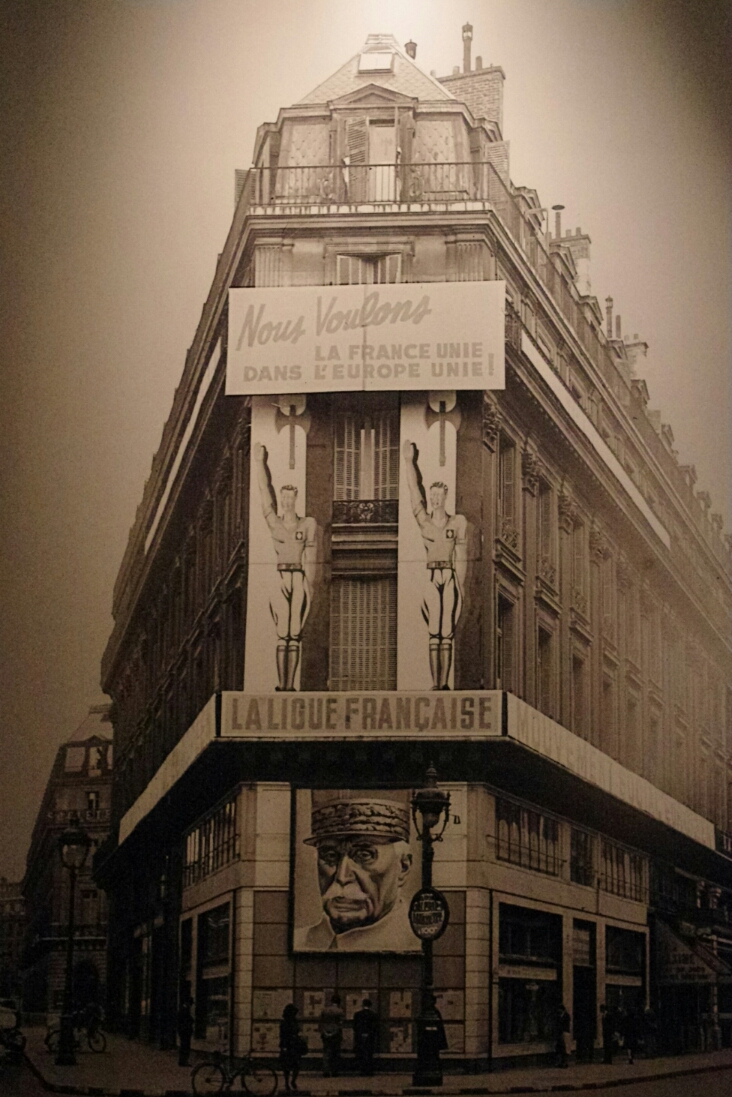
 At the Hotel de Ville, they had a free exhibition of the French Resistance in Paris
.The first section had pictures of life in Paris under the Nazi Germany regime.
This was a Jewish area after the Nazi's and Vichy French sent them away to concentration camps.
This picture is haunting to me because of the casualness of the women and the menacing look of the German officers on the left.
A secret suitcase radio.
A handbill telling those who are loyal to Charles De Gaul to sabotage, set fires and destroy the occupying forces equipment.
After the allies landed on D-Day and were advancing towards Paris, the resistance and loyal citizens organized roadblocks. I find the relaxing attitude these two have slightly amusing.
A map with Paris and the German roadblocks.
This fellow was a Chemistry professor at the Paris university making explosives for the Resistance.
Another roadblock with a defaced picture of Hitler.
Frenchmen gathering weapons. I like the smile the woman has on the left.
After some of France was liberated, Charles De Gaul encouraged a new French fighting force to be formed to assist the allies, called the FFI (French Forces of the Interior). It was an attempt to better organize the French Resistance with the Allies under one command.
This picture is of women suspected of colluding with the occupiers.
A call for people to open their homes to people returning from concentration camps. This not only included those of Jewish decent but prostitutes, homosexuals and anyone the Germans and Vichy did not like.
This Muslim hospital treated members of the French resistance. It was largely left alone because of the alliance the Germans had with the Ottoman Empire and the clever "plague" and virus outbreaks when Germans came to check things out.
Tintin magazine ran a special in 1949 on the liberation of Paris by General Leclerc, head of the 2nd Armored Division.

As a gamer, the actions of the French Resistance show that covert resistance works to redirect the enemies resources away from the front lines and give aid to allies battleplans. Once the allies neared Paris, the Resistance was important to the allies for local knowledge and an immediate police force.

France - Paris Again Day 2 - Musee de L'Armee - Later French Exibits

 There is a section of the museum that encompasses the time period from the French Revolution of 1792 to the third French Republic in 1870. There is also currently a special exhibit centering on Napoleon the first's reign.
 A model of the Bastille.
 This is what a typical section looks like. Uniforms of the time period, paintings of famous personages of a particular battle or era, artifacts from that era and...
 ...a large table with a particular battle played out on it. They did an excellent job of setting up the battle including reasons for it then played it out from start to finish. By this point my wife and I were war museumed out and could have spent another day here. We had not even seen the WW1 and WW2 section yet. Another time.
 In the Napoleon exhibit they had the painting of "Napoleon Crossing the Alps" by Jacques-Louis David in 1800. It is a magnificent painting full of symbolism and meaning. It is no wonder the image was put on pottery and copies made.
 Lord Nelson's uniform he was wearing when shot at the battle of Trafalgar in 1805. The white hole in the left shoulder is the wound that killed him.
 Napoleon's uniform.
 Royal jewelry worn by Marie-Louise of Austria.
In the Napoleon exhibit they also show the other side of the stories. There was this impressive picture of Agustina de Aragon. She was a woman who fought in the Spanish war of Independence against the French as a civilian and when she entered the military, rose to the rank of Captain. She was an inspiration for the Spanish to throw off the French invaders and lived to 71 years of age.

Battletech Aces: Scouring Sands

Printed in November of last year, this first Battletech Aces campaign ( Scouring Sands ) is set in the iLClan era (the latest one added to ...

Popular Posts